
Nutley Family Service Bureau (NFSB) will host the second annual Inclusive Mental Health Symposium, a virtual event, on Thursday, June 18 from 9:15 am – 5:15 pm. The theme is “Transforming Care: Inclusive Mental Health Practices for People with Disabilities.” This article is part of a series that will preview the event’s presentations and profile the subject matter experts.
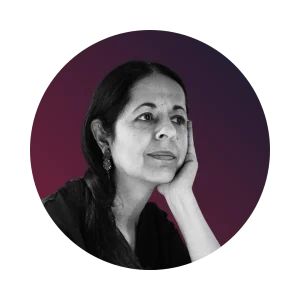 Priya Lalvani, Ph.D. began working with individuals with disabilities in 1989 when she landed her first job at an adult day care center in New York City for previously institutionalized adults. She would go on to earn her master’s degree in special education from Columbia University and Ph.D. in Developmental Psychology from the City University of New York (CUNY).
The plot twist in her story came 13 years into her career when her daughter was born with Down syndrome.
“That’s when I started to deeply examine my own practice,” Dr. Lalvani said. “I realized that the environmental and societal responses to disability are as important as the condition. Disability is not just the presence of impairment, but also how the world responds to that impairment. In other words, the experience of disability is also about access, attitudes, and acceptance.”
She began to explore how difficult it can be for young people with disabilities to construct positive identities for themselves in the face of a school system, mental health system, and rehabilitation system that seek to “fix” the disability. Although their efforts are well intentioned, the model needs to change.
“We live in a society where disability is constructed as a problem, not an identity group or a form of human variation,” Dr. Priya said. “The question to me is, how can we support people with disabilities while valuing their way of being? How do we create systems of access and simultaneously change society’s thinking and reactions to people with disabilities? Interventions cannot just be aimed at ‘fixing’ the body or mind. Providing skills to disabled individuals is helpful, but interventions have to be aimed at society as well.”
Today, Dr. Lalvani is a professor at Montclair State University. As she tells practicing teachers in her classes, it’s not about shoving a round peg into a square hole and chiseling the peg to make it fit. Instead, society should create a uniquely shaped hole that doesn’t force the peg to comply, fit into the existing framework, or adjust to ableist thinking.
About the Presentation
Many people in helping professions who work with people with disabilities identify as advocates. They may genuinely strive to make life better for those they support. However, are there times when their advocacy actions and choices do not align or are even at odds with the agendas of disabled activists?
“My presentation will discuss a move to a different model, which is allyship, and explore a number of questions that are important to this shift,” Dr. Lalvani said. “What does allyship look like? How is it different from advocacy? How can we, as parents or professionals, support positive disability identity?”
Positioning disability as a form of human variation alongside other marginalized identities, we will learn how to not only help disabled individuals build the skills they need, but also support them in developing a positive sense of self.
The presentation will discuss how difficult it can be for a young person with a disability to have good mental health if they don’t have a positive sense of self. Society has sent a message that one aspect of their being, their disability, is something that should be corrected or removed.
“This presentation is an invitation to rethink how society perceives people with disability, and to rethink our expectations and goals for our work with people with disabilities,” Dr. Lalvani said. “Let’s consider how can we support young people in a way that also affirms their personhood and dignity, using an allyship framework.
About Dr. Lalvani
Dr. Priya Lalvani is a professor of disability studies and the coordinator for the graduate program in inclusive education at Montclair State University. She holds a Ph.D. in developmental psychology. Her research is focused on examining the socio-political contexts that frame the lived experiences of disability and seeking to disrupt ableism in schools and society. Her work is widely published in scholarly journals and international textbooks. She is the co-author of Undoing Ableism: Teaching About Disability in K-12 Classrooms and the editor of Constructing the (M)other: Narratives of Disability, Motherhood, and the Politics of Normal.